How to Find B2B Customers in Switzerland: Sources, Filters and Workflow
22 August 2026
Finding B2B customers in Switzerland requires reliable public sources, precise local filters and verification before outreach. This workflow takes you from market definition to a usable CSV lead list.
If you want to find B2B customers in Switzerland, do not begin with thousands of email addresses. Begin with a defined group of companies that you can genuinely serve. Set the industry, location, observable qualification criteria and exclusions before collecting any data.
An international software provider entering Switzerland might first target fiduciaries in Zurich with a multilingual website and a visible local office. A building supplier could focus on active contractors in Zug, checking each legal name and UID before passing records to a German-speaking salesperson. These lists are smaller, but a team can actually work through them.
The practical workflow is straightforward: define the profile, consult several public sources, filter the results, verify the legal entity, complete the contact fields and prepare relevant outreach. This turns Swiss B2B lead generation into a repeatable sales process rather than a one-off spreadsheet exercise.
Define the target before searching
A query such as “companies in Switzerland” is too broad. It combines restaurants, consultancies, workshops, branch offices and entities with no reason to buy your product. Translate the market into criteria that can be checked using public information.
Your one-page target definition should cover:
- the actual activity, such as dental practice, cleaning company or solar installer;
- the service area by canton, city, district or realistic travel radius;
- visible fit signals such as a physical office, website, phone number or legal form;
- exclusions such as associations, branches, companies in liquidation or firms without websites;
- the likely role to approach and a credible reason for contacting it.
Swiss geography directly affects list quality. If your service requires site visits, a nationwide list may create unreasonable travel and support costs. If you sell remotely, organising leads by language region helps you adapt messaging, meeting availability and supporting material.
Language is a commercial filter, not a final translation task. English can work with international businesses in Basel, Geneva or Zurich, but many local SMEs expect German, French or Italian. If you cannot support a customer in the language used during sales, that should influence qualification before outreach.
Sources for finding Swiss companies
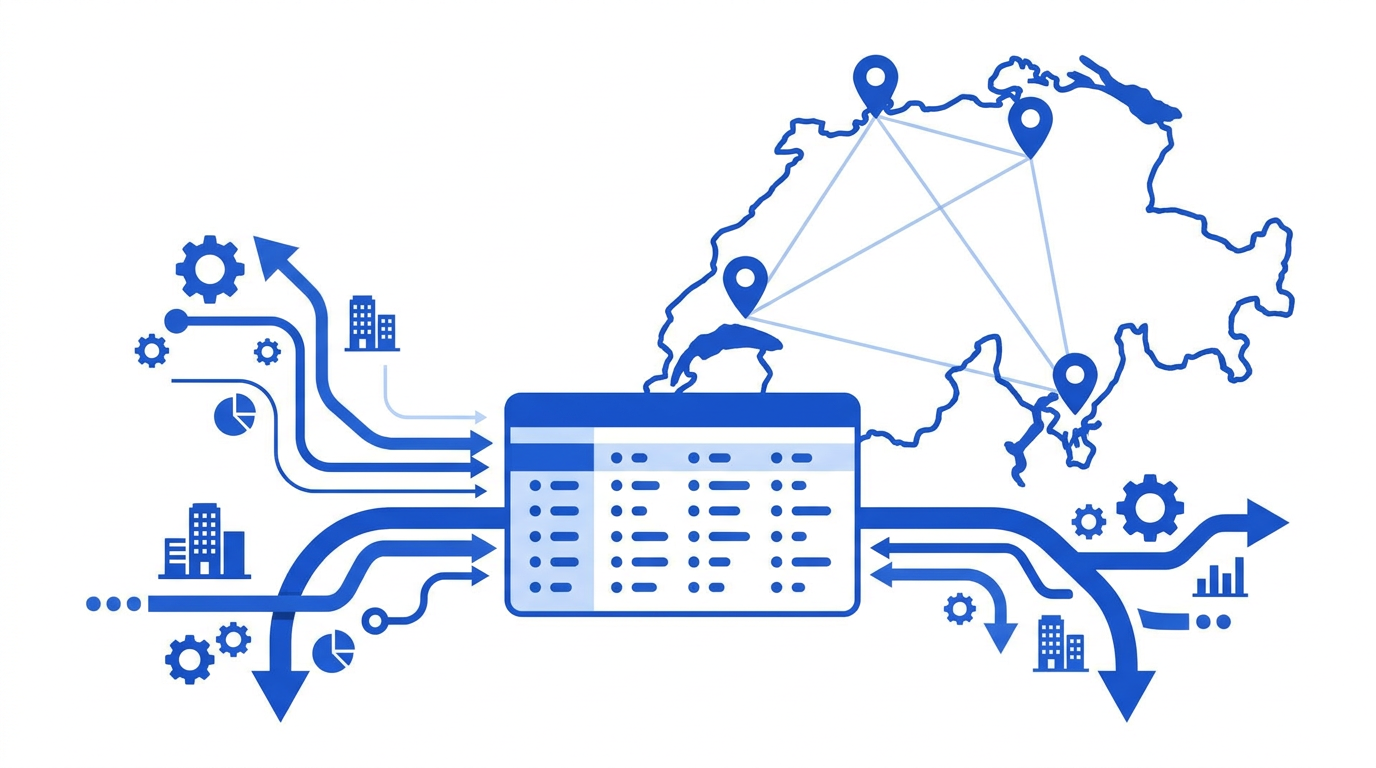
No source contains every field you need. Local directories support discovery, Google Maps shows geographic presence, company websites provide commercial context and Zefix confirms legal identity. Cross-checking them reduces duplicates and mistaken matches.
local.ch and search.ch
These directories are particularly useful for businesses with a local presence. Depending on the listing, you may find the business name, address, phone number, website and other publicly displayed contact details.
Categories are not fully standardised. One company might appear under management consulting, fiduciary services or several related activities. Run a few searches using adjacent terms, then merge results by domain, phone number, address or UID.
Check whether a phone number has an asterisk. In Switzerland, the mark indicates that its holder does not wish to receive advertising from third parties where there is no existing business relationship. The Unfair Competition Act, or UWG/LCD, governs unfair marketing practices. A publicly listed number is not blanket permission for promotional calls.
Google Maps and company websites
Google Maps helps locate businesses associated with a particular city or area and confirm that they have a visible operating presence. Reviews, photographs and opening hours can provide context, but they do not prove headcount, financial health or legal status.
Visit the company website next. Contact, team and about pages clarify services, languages and locations. A role-based address such as info@company.ch may be more suitable for an initial company enquiry than collecting a named employee’s address without a clear need.
Zefix and the UID number
Zefix is the central index of companies recorded in Switzerland’s cantonal commercial registers. It helps you verify the official name, registered office, status and registration. A UID distinguishes similarly named entities and provides a stable identifier for your records.
Zefix is not a complete sales database. It may not include a useful contact, and a registered corporate purpose does not always describe the company’s current offer accurately. Use it for legal verification, then qualify commercial relevance elsewhere. Our guide to the Swiss commercial register explains the role of these records further.
Filters that turn records into a usable list
Start with relevance: does the company genuinely belong to the target segment? Then apply territory, legal status, contact availability and sales priority.
| Field | Why it matters | |---|---| | Official company name | Supports correct identification | | UID | Reduces duplicates and mistaken matches | | Canton and locality | Enables regional ownership | | Business category | Connects the company to the offer | | Website and domain | Supports verification and personalisation | | Public email | Provides a possible contact channel | | Phone and asterisk | Helps assess telephone outreach | | Source and check date | Makes records traceable | | Lead status | Prevents repeated contact |
Do not confuse data completeness with lead quality. A company with both an email and a phone number is not automatically interested. Priority comes from the combination of fit, an observable reason to talk and your ability to serve the account.
A seven-step operating workflow
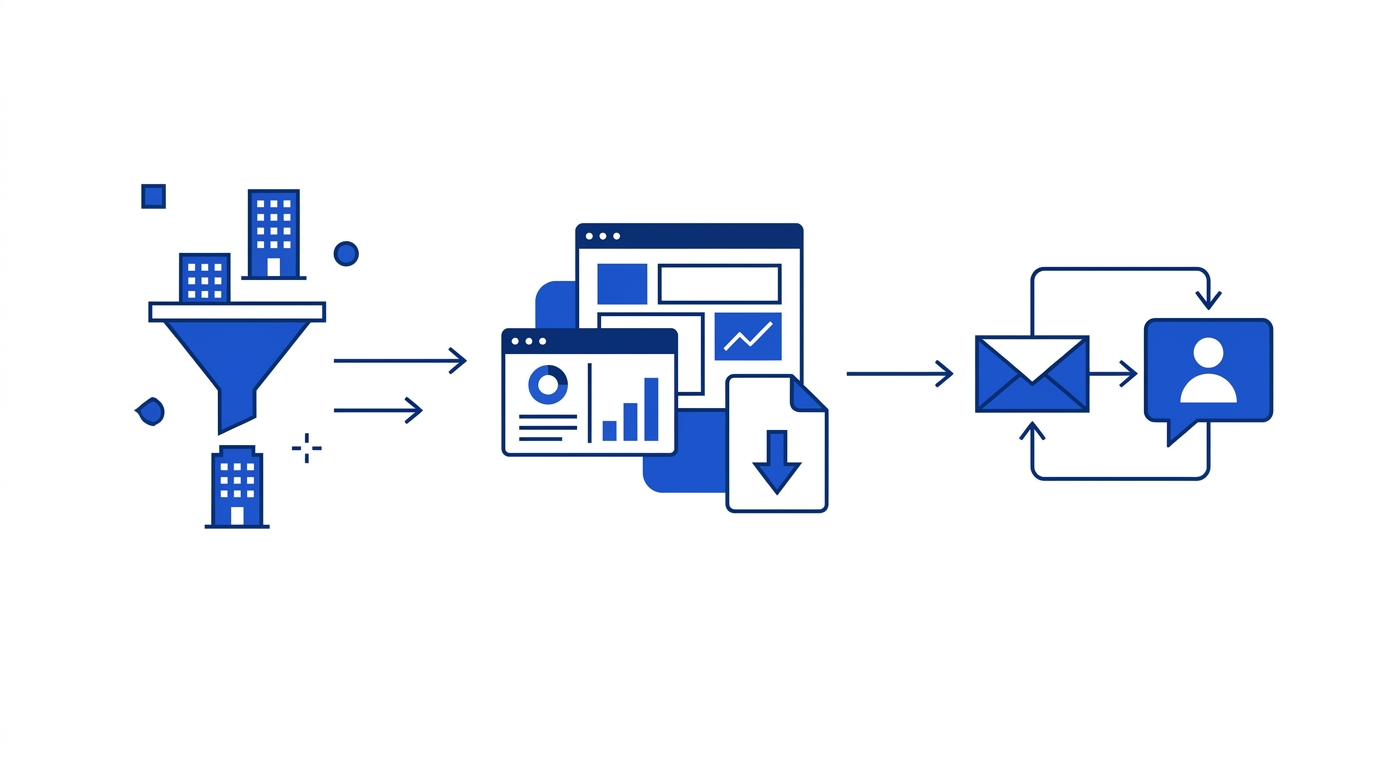
1. Select a narrow segment
Combine one activity with one area, such as “dental practices in Lausanne and nearby municipalities”. Define exclusions and cap the list at the number your team can review properly within a week.
2. Search several sources
Use local.ch, search.ch and Google Maps, recording the source for each result. With Swiss Lead Pro, you can generate company lists from these public sources, extract available emails and prepare a CSV export.
3. Remove duplicates
Compare domains, UIDs, phone numbers and addresses. Google Maps may show a trading name while the register contains the full legal company name. Keep one consolidated record and retain the source references.
4. Verify the entity in Zefix
Check that the business is active and that its official name and registered office match. If the result is a branch, determine whether purchasing decisions happen locally or at the head office.
5. Qualify the reason for outreach
Review the website and find a factual point of relevance. Do not manufacture a problem. An agency may note that a Ticino company’s website is only available in Italian; it should not claim that the business is losing international revenue without evidence.
6. Export to CSV and assign ownership
Use consistent fields and import them into your CRM. Add an owner, next action and due date. Without accountability, even a well-researched list soon becomes an abandoned file.
7. Measure each segment
Track replies, qualified conversations, meetings and rejection reasons. If a segment does not respond, review the target and message before increasing volume.
Swiss rules for business outreach
Switzerland’s revised Federal Act on Data Protection, commonly referred to as the revFADP or nLPD, protects personal data relating to natural persons. A named business email may be personal data; a company name alone generally is not. You should still define a purpose, collect only necessary details, protect the file and correct outdated records.
The Unfair Competition Act also matters for email and telephone outreach. Avoid automated mass advertising, disguised senders and messages that provide no simple way to object to further contact. Respect telephone asterisks and suppression requests. The exact assessment depends on the channel and circumstances, so have large or automated campaigns reviewed by a Swiss legal professional.
In practical terms, state who you are, why you selected that particular company and where you obtained the contact information. A short, specific message is more defensible and useful than a generic sales sequence.
When this approach is not enough
Public company lists are not the primary solution if you sell to a handful of major groups with complex procurement structures. That requires account mapping, tender monitoring, relationship building and stakeholder research. Nor will directories reveal confidential investment projects that have not been announced.
Swiss Lead Pro helps discover and organise Swiss companies, but it does not replace human qualification, a CRM or sales work. Public records can also be incomplete or outdated. Recheck high-priority accounts shortly before contacting them.
Build a small test list first
Choose one segment and one region. Build an initial list, verify the UID and website, remove duplicates and approach a limited number of companies with a relevant message. Review the outcomes before expanding the search.
You can use Swiss Lead Pro for 3 free searches per month, extract available contact details and export your list to CSV. For ongoing prospecting, review the plans and pricing.
Try Swiss Lead Pro
Build Swiss company lists with phone, email and Zefix data. 3 free searches.
Start free