How to find B2B customers in Switzerland without buying lists
28 August 2026
You can build a useful Swiss prospect list from public directories, Google Maps and the commercial register. The goal is not maximum volume, but relevant companies, traceable data and responsible outreach.
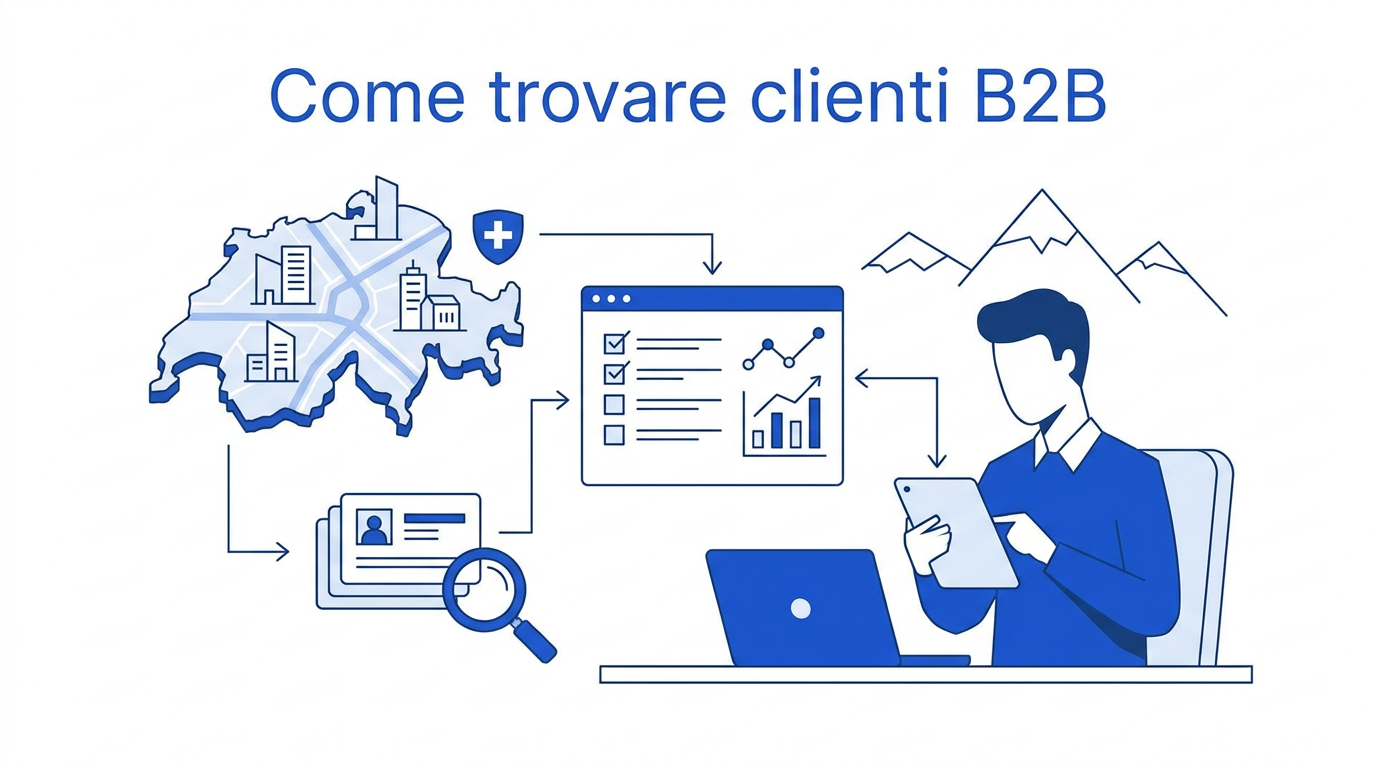
Buying a large database can look like the quickest route into the Swiss market. It often transfers the hardest work to your team: removing inactive companies, identifying duplicates, checking the source of email addresses and deciding whether each record fits your offer.
A better starting point is a small list built from traceable public sources. Define the company profile, discover businesses through Swiss directories and maps, and verify each record before outreach. A UK software provider entering Switzerland does not need every SME in the country. It may need logistics firms in Basel and Aargau with a suitable business model and a public corporate contact channel.
Define the target before opening a directory
“Swiss companies” is not an actionable audience. Specify the activity, location, company type and an observable reason why your offer might be relevant.
A cybersecurity consultancy could focus on independent professional-services firms in Zurich and Zug. A French-speaking appointment platform might begin with dental practices in Vaud and Geneva. Your criteria may include language region, legal form, website availability, number of locations or service area.
Write down exclusions too. These may include branches, sole proprietorships, businesses without an official website or companies already covered by a partner. Clear exclusions prevent a broad search from becoming an unmanageable spreadsheet.
Switzerland also requires regional adaptation. A campaign prepared for Zurich should not simply be translated and sent to Lausanne or Lugano. Language, local examples and the practical reach of your service all affect relevance.
Combine complementary Swiss public sources
No single source provides a complete and permanently accurate company profile. local.ch, search.ch, Google Maps, official websites and Zefix each answer a different question.
Directories and Google Maps
local.ch and search.ch are useful for exploring business categories by municipality or region. Google Maps works well for location-dependent searches, such as engineering firms around Winterthur or private clinics in Lausanne. Typical records include a trading name, address, telephone number, category and website.
Treat these as discovery data rather than final truth. A listing may be old, duplicated or published under a brand instead of the registered company name. Save the source and the date you checked it. Work in small combinations of category and location so that quality remains visible.
Zefix and the UID number
Zefix is Switzerland's central business name index. It can help you check the registered entity, legal seat, legal form and current register status. The UID number is particularly useful for distinguishing companies with similar names and removing duplicates.
The register does not identify the ideal buyer for your product, and registration does not prove commercial interest. Use it to confirm the legal entity, then return to the official website to assess relevance and published contact options. Our guide to the Swiss commercial register provides further context.
Turn search results into an outreach-ready list
A practical record should include the registered name, website domain, town, canton, business category, source, check date and UID where available. Add public corporate telephone numbers and email addresses, plus a short reason for inclusion.
That reason should be factual. “Operates four clinics in French-speaking Switzerland” is useful. “Looks promising” is not. A clear note supports segmentation and helps the person writing the message avoid generic claims.
Check email addresses on the official company website. A published role-based address may be suitable for a relevant initial enquiry. Do not generate personal addresses from an employee's name and domain without a sound basis. Deduplicate using the UID, domain and legal name, then separate companies into groups with similar circumstances.
For an international team, record the preferred business language as well. Do not infer it solely from the canton: bilingual regions and multilingual companies require a closer look at the firm's own website and communications.
Account for Swiss outreach and privacy rules
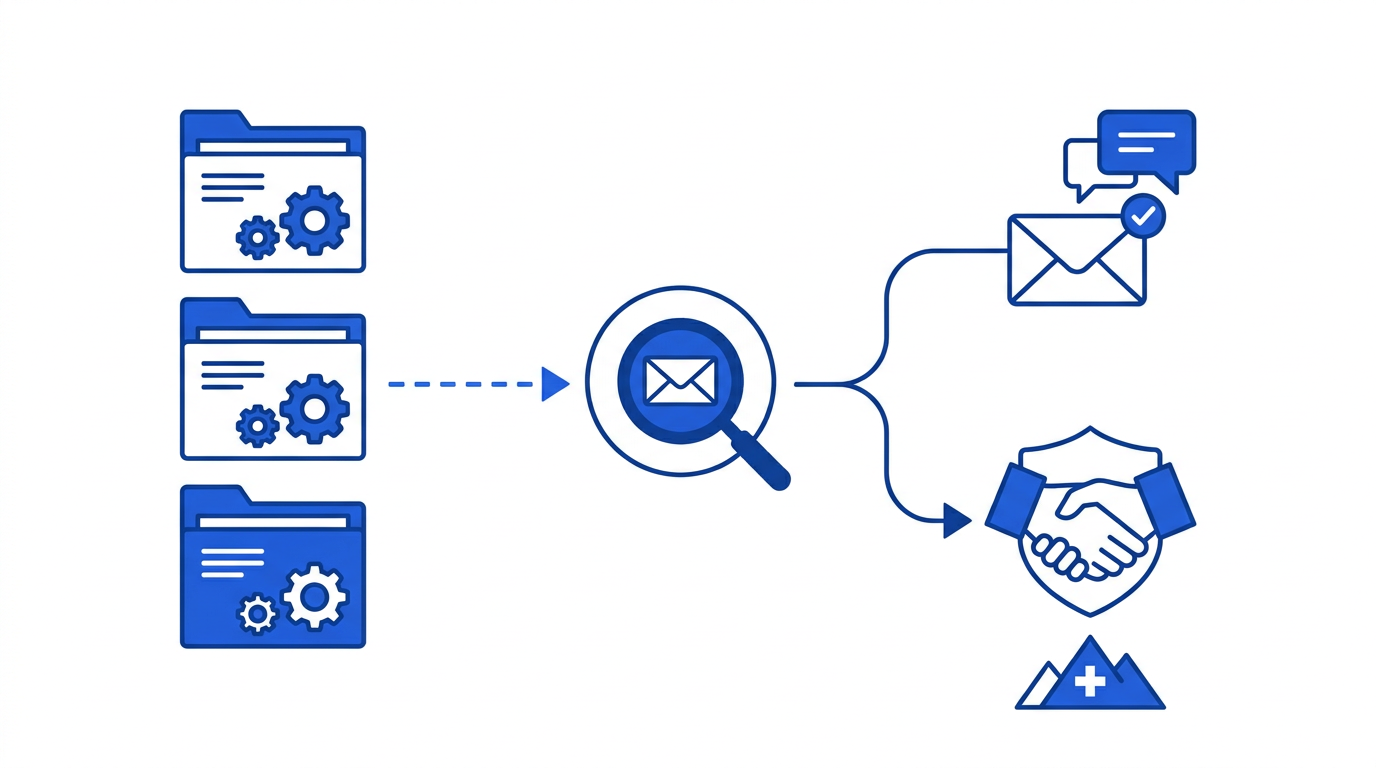
Public availability does not create unlimited permission to use data. Swiss outreach may engage the Unfair Competition Act, the revised Federal Act on Data Protection, commonly called revFADP, and preferences expressed by the recipient.
For telephone marketing, check the asterisk in the directory. It indicates that the subscriber does not want advertising calls and should not be bypassed. Commercial email should clearly identify the sender and business, explain the relevant connection and provide a simple way to stop further messages. Avoid unchecked bulk sends, misleading subject lines and concealed sender details.
Under revFADP, personal-data processing should be transparent and proportionate. Collect only what your task requires, secure the file, restrict access and decide when outdated records will be deleted. If your campaign involves sensitive data, regulated industries, monitoring or people covered by EU rules, obtain professional legal advice. This article is operational guidance, not a legal opinion.
Build and test a repeatable workflow
Start with one segment and 30 to 50 businesses. Verify each record, choose an appropriate contact channel and document replies, objections, exclusions and incorrect data. Review the first cycle before expanding. This reveals whether the issue lies in the targeting, message, channel or offer.
Consider an international facilities supplier looking for customers around Zug. A search for every “construction company” may include developers, architects, trades and holding companies. Checking the business activity, website, legal seat and legal form allows the supplier to remove obvious mismatches before anyone sends an email.
Swiss Lead Pro brings together results from local.ch, search.ch, Google Maps and Zefix, extracts publicly available email addresses and supports CSV export. Human review still matters. Software can organise public information, but it cannot guarantee that a company needs your service or that a contact is appropriate.
You can review how the app works and compare the pricing options. Free includes 3 searches per month. Pro provides 30 searches for CHF 9.90 per month or CHF 100 per year. Unlimited costs CHF 19.90 per month or CHF 220 per year. A top-up of 10 searches costs CHF 10.
Start with one narrow Swiss segment
Choose a specific activity and region, build a small list and verify it from end to end. If you want to avoid copying records manually across several platforms, try Swiss Lead Pro with three free searches and export the selected companies to CSV.
Try Swiss Lead Pro
Build Swiss company lists with phone, email and Zefix data. 3 free searches.
Start free