Lead generation for Ticino SMEs: a practical market-entry guide
30 August 2026
A practical process for international and Swiss teams seeking verified B2B prospects in Ticino. Learn how to segment, verify and approach local companies responsibly.
Generating leads in Ticino is not a matter of downloading the largest possible company list. You need businesses that fit your offer, details you can verify and a credible reason to start a conversation.
This is especially relevant for international teams entering Switzerland. Ticino is Italian-speaking, has close commercial ties with the rest of Switzerland and Italy, and includes distinct local business areas. A generic Switzerland campaign written for Zurich will rarely be enough.
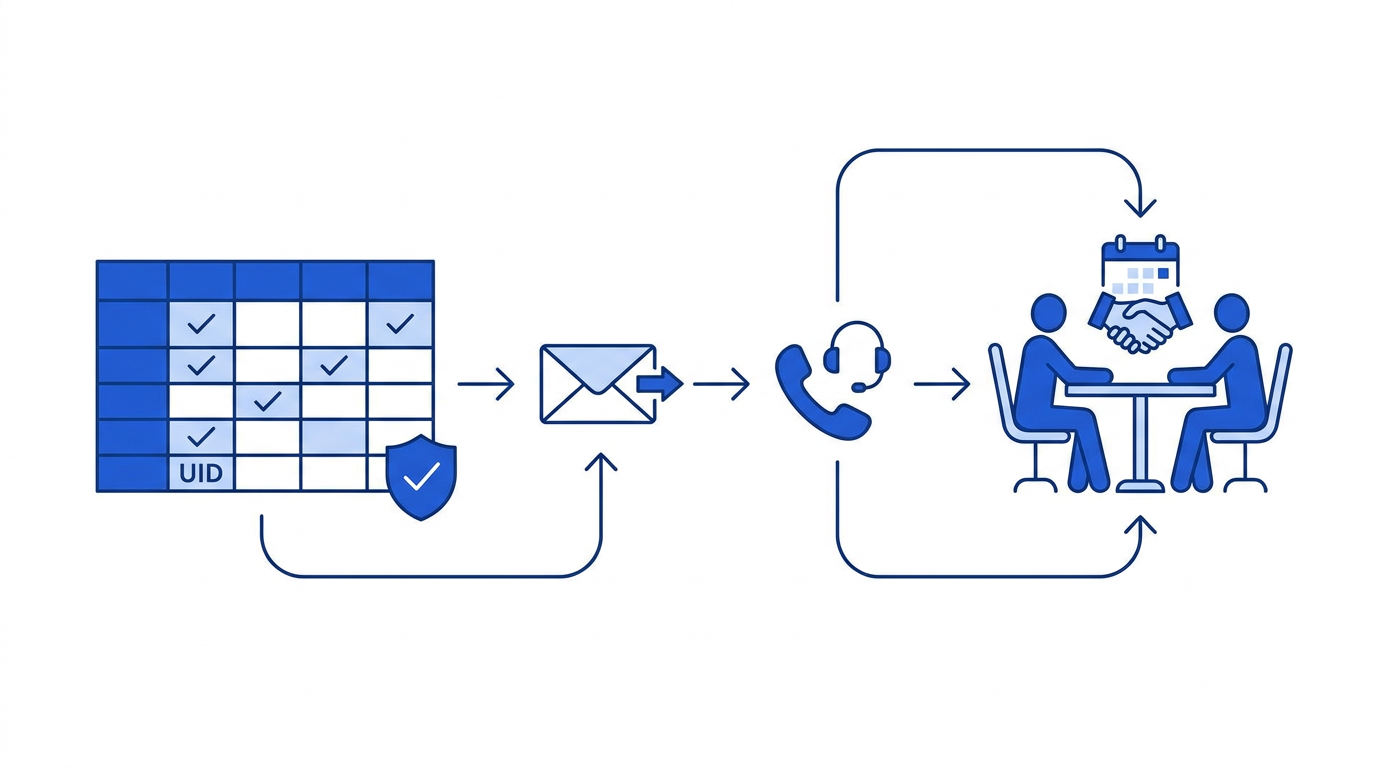
The working process is straightforward: define a narrow segment, collect public data, verify each business, assign priorities and tailor the outreach.
Define your target companies in Ticino
Industry labels alone are too broad. “Construction companies” can include small trades, general contractors and businesses that do not match your delivery model. Define the activity, location, observable size, likely need and job function you want to reach.
A UK software provider might target fiduciary firms in Lugano that operate more than one office. A German equipment supplier could focus on registered manufacturers around Mendrisio. A French-speaking agency may investigate independent hotels near Locarno and Ascona with an active website but an unclear direct-booking journey.
Start with one small segment
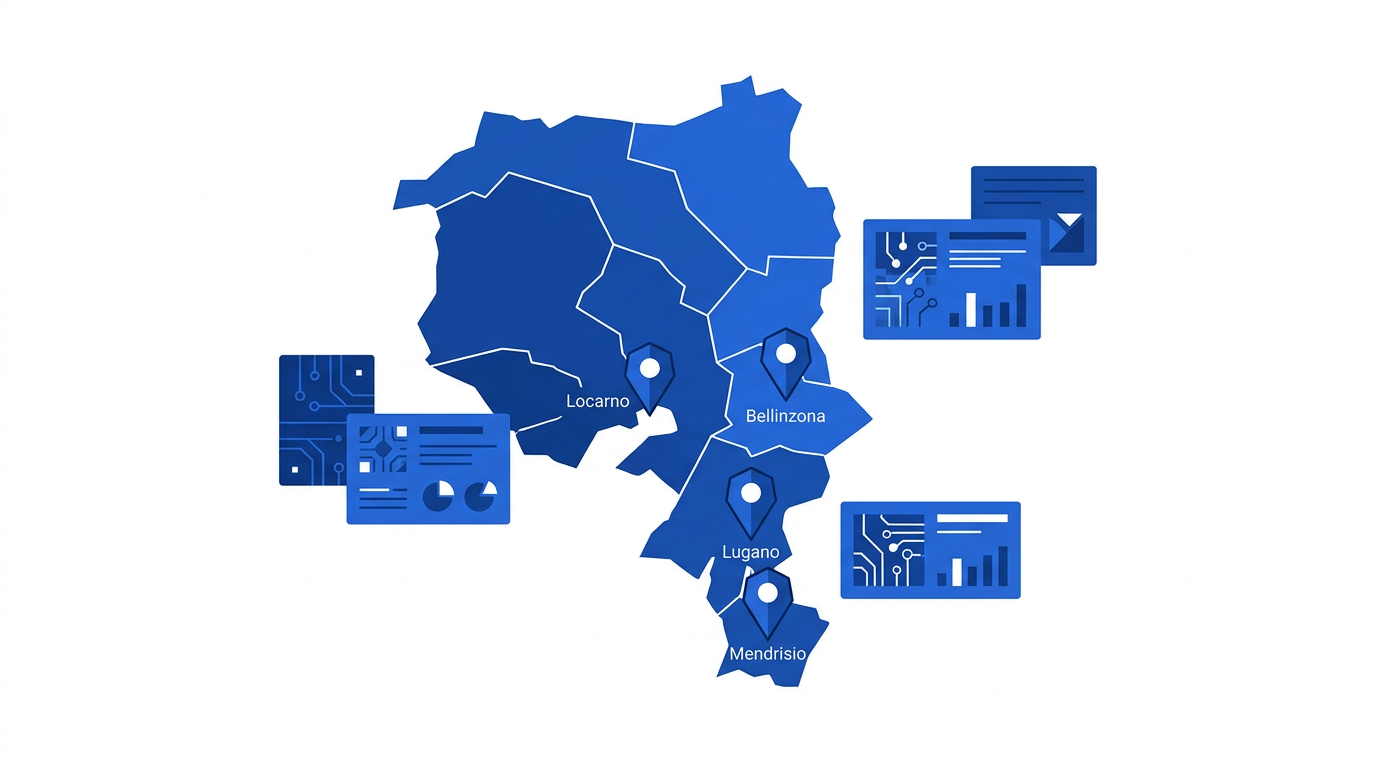
Combine one category with one area: dental practices in Lugano, property managers in Locarno, garages near Bellinzona or industrial businesses in Mendrisiotto. Review the first results manually. You will quickly see whether the category contains duplicates, sole traders outside your target or inactive organisations.
Ticino is compact but not uniform. Sopraceneri and Sottoceneri have different commercial networks and concentrations of activity. Language also matters. Prepare an Italian message and make sure someone can handle a reply or call in Italian. Claiming to serve Ticino while forcing prospects into another language creates unnecessary friction.
Build the list from public business sources
local.ch and search.ch can provide published categories, addresses and phone numbers. Google Maps helps you inspect local presence, websites and operating details. Zefix, the Swiss central business name index, supports checks against commercial-register information and UID numbers.
Do not assume every result is ready for outreach. A company may appear twice, use a trading name that differs from its legal entity or no longer be active. Cross-check at least two data points, such as name and address, domain and phone number, or legal name and UID.
Swiss Lead Pro brings these public-source searches together, extracts publicly discoverable email addresses and exports the results as CSV. Its Zefix checks are useful when legal identity matters; see the overview of the Swiss commercial register for more context.
Fields worth keeping
Start with legal name, category, municipality, website, email, phone, source, UID and verification status. Add two manual fields: reason to contact and next action.
A reason to contact should come from something observable. It might be multiple locations, a recently registered entity, an outdated website or a clear operational fit with your service. Avoid pretending to know that a company has a problem. If there is no plausible connection, lower its priority.
Qualify leads before outreach
Score each company from zero to two on three simple criteria:
| Criterion | 0 points | 1 point | 2 points | |---|---|---|---| | Fit | weak | possible | direct | | Need signal | none | uncertain | visible | | Reachability | no suitable details | general contact | relevant channel |
Work on businesses scoring five or six first. Research those with three or four further. Keep the remainder in the file, but do not spend immediate sales time on them.
A published email address is not evidence of consent or buying intent. It provides a possible channel, not automatic permission for indiscriminate campaigns.
Make the first contact credible
State briefly why you selected that business. An overseas supplier approaching a Ticino construction firm could refer to its publicly listed project locations and ask who manages equipment procurement. That is more credible than sending the same company profile to every info@ address.
A useful first email has four parts: a specific reference, a relevant issue, a limited proposal and a simple question. Keep it short. Do not lead with a heavy attachment or make performance claims you cannot support. If the correct person is not public, ask who is responsible for the topic.
Local presence helps, but do not manufacture it. If your team is outside Switzerland, say so clearly and explain how delivery, support, invoicing or data handling will work for a Swiss customer.
Use measured follow-ups
A sensible sequence may include one email, a follow-up after several business days and a call if a suitable business number is available. Record the date, outcome and next step. Stop after two or three unanswered attempts. Ticino's professional networks overlap, so aggressive outreach can damage your reputation quickly.
Account for revFADP, unfair competition rules and phone preferences
Switzerland's revised Federal Act on Data Protection, commonly called the revFADP, governs personal data. Pure company details are not necessarily personal data, but an address such as firstname.lastname@company.ch can identify an individual. Handle it transparently, securely and only to the extent required for your purpose.
The Federal Act against Unfair Competition also affects unsolicited commercial communications. Bulk email requires particular care. Identify the sender clearly, maintain genuine relevance and provide a simple way to object to future messages. Do not use lists of unclear origin or conceal how you found the contact.
Before calling, check the asterisk attached to telephone-directory entries. It indicates that advertising calls are not wanted and should be respected. Distinguish a business switchboard from an individual's mobile number, and record opt-out requests immediately.
This is practical guidance, not legal advice. If you plan high-volume sending, detailed tracking, enrichment or profiling, ask a Swiss legal or data-protection specialist to review the process.
Measure conversations, not spreadsheet size
Track qualified companies, valid contact details, relevant replies, conversations and meetings. Break results down by segment. Fiduciaries in Lugano may respond differently from hotels around Locarno or manufacturers near the Italian border. This information should determine the next list you build.
Swiss Lead Pro does not replace positioning, message writing or sales work. It is also a poor fit if you mainly sell to consumers, are researching one large account or already maintain a complete and current CRM. It is useful when your team regularly needs verifiable Swiss B2B leads without copying every field manually.
The Free plan includes 3 searches per month. Pro provides 30 searches for CHF 9.90 per month or CHF 100 per year. Unlimited costs CHF 19.90 per month or CHF 220 per year. A CHF 10 top-up adds 10 searches. Review the pricing options against your expected research volume.
Choose one narrow Ticino segment, generate a small list and manually review the highest-scoring companies. Start with Swiss Lead Pro's Free plan and judge the process by the quality of the conversations it creates, not the number of exported rows.
Try Swiss Lead Pro
Build Swiss company lists with phone, email and Zefix data. 3 free searches.
Start free