How to build a Swiss B2B prospect list by canton, city and industry
12 October 2026
A useful Swiss prospect list combines a defined sales territory, a specific business activity and verifiable company data. This guide covers the process from search criteria to a clean CSV file.
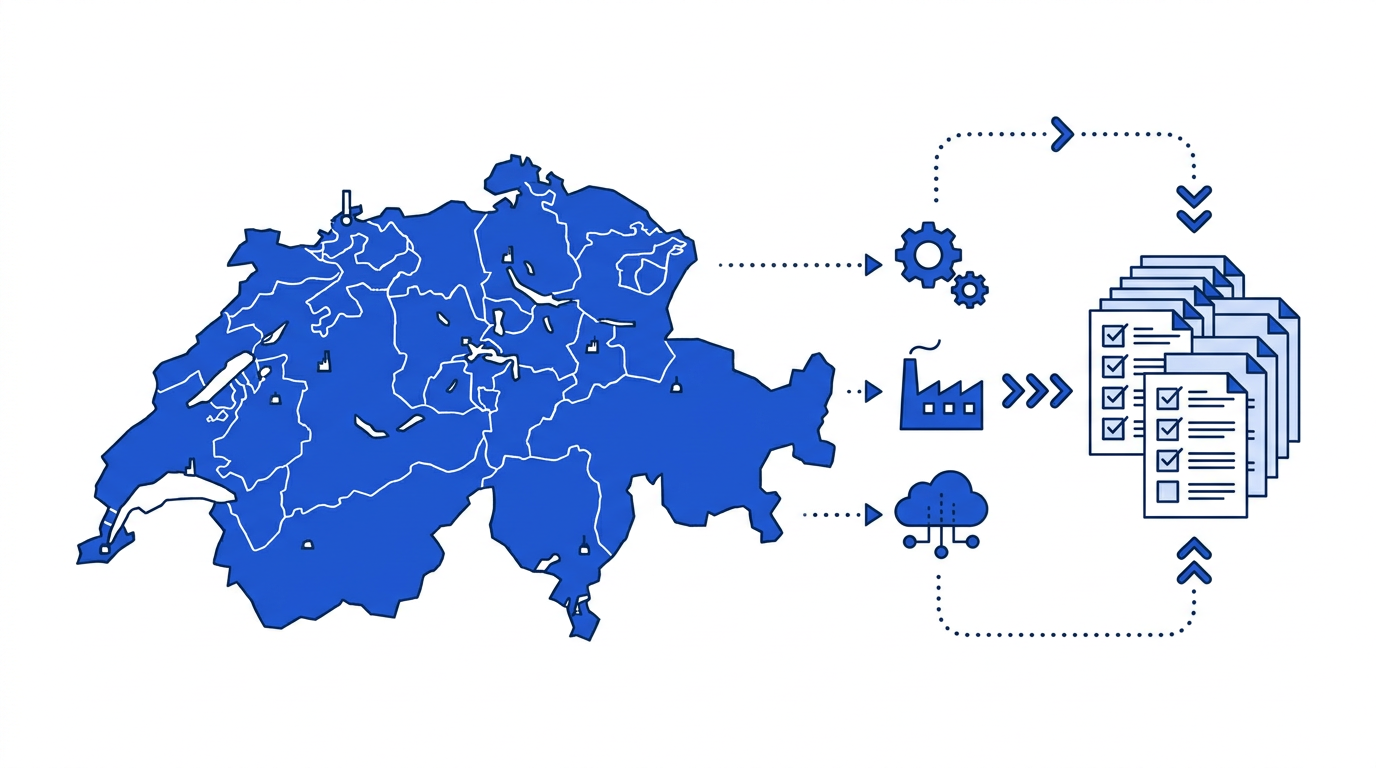
The most effective approach is to define three things before collecting any records: territory, business activity and minimum qualification criteria. You can then combine public sources and clean the results. A search for “companies in Zurich” is too broad. “Accounting firms in the canton of Zurich with a website and public contact details” is a workable sales segment.
A B2B prospect list should not be a spreadsheet filled with company names. It needs to help your team decide whom to contact, why the account may fit and which territory owns it. Switzerland makes this slightly more complex because addresses, business descriptions, contact details and registry data often come from different sources. Companies may also describe the same activity in German, French or Italian.
Define the target account before opening a database
Write down five criteria: the actual business activity, canton or local service area, preferred company profile, required data fields and the likely reason the company could need your offer.
For example, a Lugano agency might target dental practices in Ticino that lack online appointment booking. “Healthcare companies in Ticino” would include pharmacies, laboratories and physiotherapists, creating a larger but far less useful list.
Avoid filters that cannot be supported by public information. Revenue, current software contracts and approved marketing budgets are not consistently available for Swiss SMEs. If one of these criteria is essential, use the list for account identification and conduct deeper qualification afterwards.
Decide between canton, city and local radius
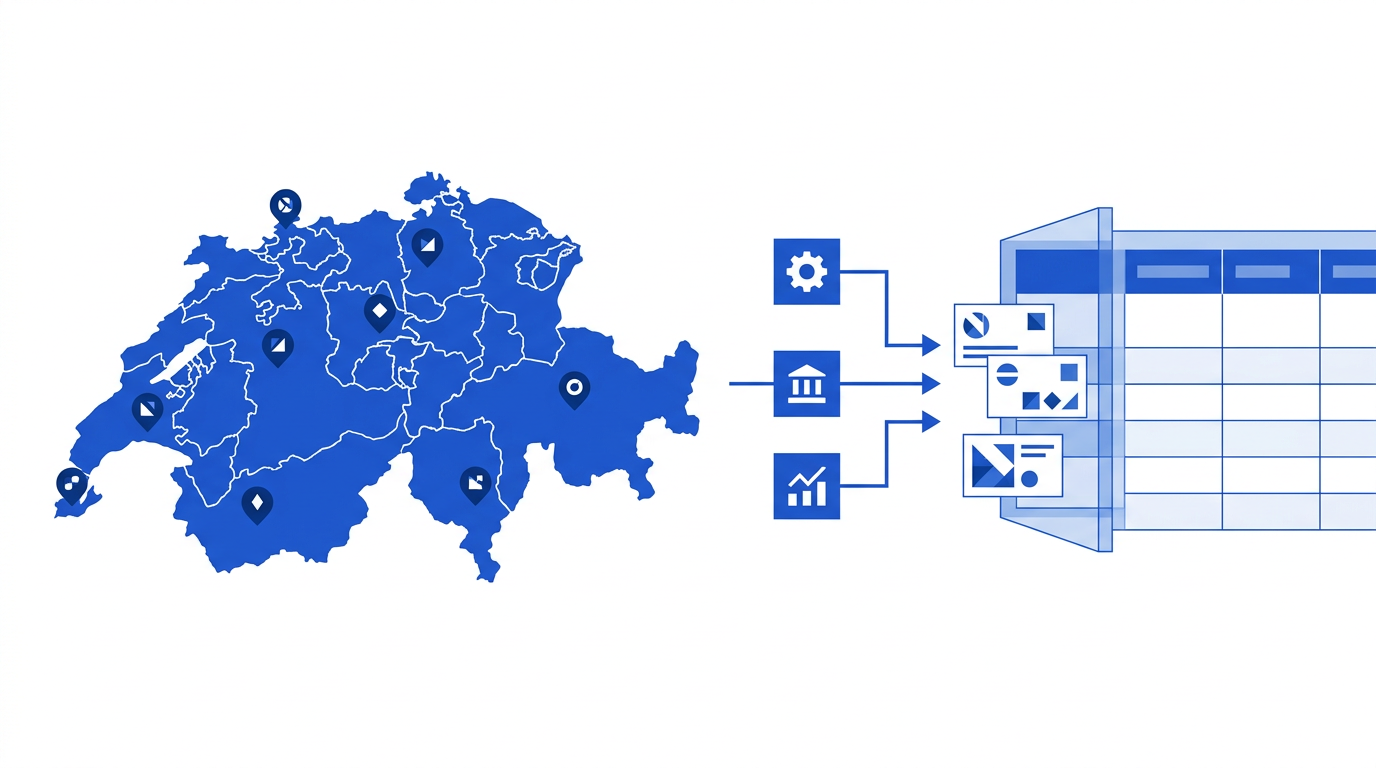
Cantons work well for sales territories, language regions and field visits. Cities are more suitable for local services. A radius around a location can reflect the real commercial area when municipal boundaries are too narrow.
A construction company in Zug may source suppliers across the canton, including Baar, Cham and Steinhausen. A maintenance provider offering rapid callouts may need a much tighter radius. You should also distinguish a company's registered office from its operational branches. A legal seat in one canton does not mean all activity takes place there.
International teams operating across Switzerland should split national lists by language region. A sequence for Lausanne should not simply be reused in Winterthur and Bellinzona. Search terminology also changes: “fiduciaire”, “Treuhand” and “fiduciaria” can reveal different sets of firms.
Turn an industry into searchable activities
Categories such as “construction” and “manufacturing” are usually too broad for tailored outreach. Break the industry down into the terms companies use in directories and on their websites.
Within construction, electrical installers, plumbing contractors, timber builders, engineering consultancies and property managers are distinct segments. Hospitality should likewise be divided into hotels, restaurants, caterers and event venues. Their buyers and operational problems differ.
Prepare local synonyms as well. Both French and German terms may be useful in the canton of Fribourg. In Graubünden, the language used by a business depends on its area. Multilingual searches improve coverage but can generate overlapping records, so plan for deduplication.
Combine directories, maps, websites and registry data
local.ch and search.ch provide categories, locations, phone numbers and directory listings. Google Maps helps identify operational locations and linked websites. The company website is usually the best source for understanding services and finding contact information the business has chosen to publish.
Zefix and the commercial register help verify the legal name, registered seat, company status and UID. The UID is valuable when distinguishing similarly named companies and merging records from several sources. Our overview of the Swiss commercial register explains the role of registry data.
Swiss Lead Pro brings together public information from local.ch, search.ch, Google Maps and Zefix, extracts publicly available email addresses and provides CSV exports. See how it works for the workflow. Automation saves repetitive research, but a verified company is not automatically a qualified buyer. The tool cannot confirm budget or current purchase intent.
Build a CSV that your sales process can use
At a minimum, keep the company name, UID, category, street, postcode, city, canton, website, phone, email and source. Add internal columns for segment, priority, reason for outreach, status and last verification date.
| Field | Purpose | |---|---| | Company and UID | Identification and deduplication | | Canton, city and postcode | Territory assignment | | Category | Message segmentation | | Website and email | Research and contact | | Source and date | Later verification | | Priority and notes | Sales workflow |
Use consistent canton abbreviations such as ZH, VD, TI and GE. Store the street, postcode and city separately. Deduplicate by UID first, followed by domain, phone number and the combination of name and address. Do not automatically delete two branches of the same brand. They may operate in different territories or have different local responsibilities.
Validate a sample before scaling the search
Treat the initial records as possible accounts rather than a finished contact list. Review the website, activity, location and company status. An active website and clearly relevant services are positive indicators. A company in liquidation, an inactive domain or a vague category calls for additional checking.
Suppose a software vendor targets multi-practitioner dental clinics in Lausanne. Directory categories may return individual dentists, dental hygienists and larger clinics together. The website may be the only public source showing how the practice is structured. An automated filter cannot always make that distinction reliably.
Start with a batch of 20 to 50 companies. Check whether the businesses fit and test the positioning of your message. If the sample contains too many false positives, adjust the category, language variants or territory before producing hundreds of rows.
Account for the Swiss FADP, UCA and directory star
Public availability does not grant permission for every form of use. Switzerland's revised Federal Act on Data Protection, commonly referred to as the revised FADP or revDSG, applies to personal data that identifies an individual, including professional details in some circumstances. Collect only what you need, document the source, secure exported files and avoid indefinite retention.
Commercial outreach must also take the Federal Act against Unfair Competition, or UCA/UWG, into account. Recipients should be able to identify the sender and commercial purpose. The offer should have a concrete connection to their role or business, and opting out of further contact should be straightforward. Avoid indiscriminate bulk campaigns. For telemarketing, respect the star shown next to entries in Swiss telephone directories and other explicit objections. Obtain legal advice if the status of a particular campaign is unclear; a prospecting application is not a substitute for that assessment.
Know when this approach is not the right one
If you are targeting only five strategic accounts, detailed manual account research may be more effective. The same applies when private criteria such as contract renewal dates or approved budgets decide whether an account fits. Swiss Lead Pro cannot reveal non-public buying intent, guarantee that an email remains deliverable or identify the correct decision-maker in every organisation.
This method is useful when an international company needs to map a Swiss market, assign accounts by canton or build a verifiable starting point for B2B leads in Switzerland. The Free plan includes three searches per month, while recurring projects can use the options shown under pricing.
Choose one precise combination of canton, city and business activity. Generate a small batch in Swiss Lead Pro, export it to CSV and verify the records before expanding the territory.
Try Swiss Lead Pro
Build Swiss company lists with phone, email and Zefix data. 3 free searches.
Start free